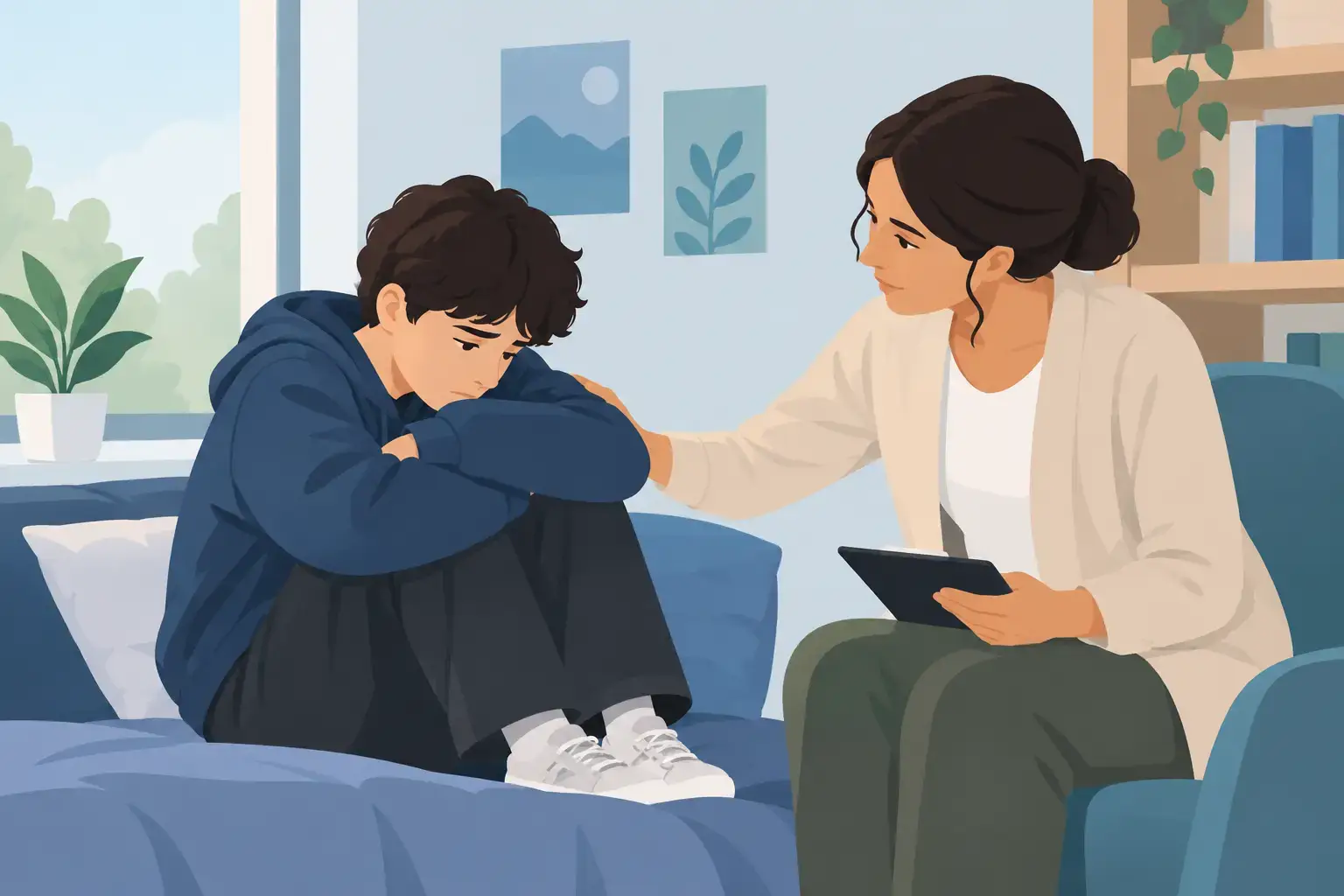
A teen who stops answering friends’ messages, sleeps through the afternoon, or suddenly says school does not matter may be dealing with far more than a rough week. Knowing how to recognize teen depression can help a parent or caregiver respond with concern instead of assumptions – and help a young person get support before symptoms become more disruptive or dangerous.
Depression in adolescents does not always look like persistent sadness. It may show up as irritability, unexplained physical complaints, perfectionism, withdrawal, or a sharp decline in motivation. Teens are also navigating school demands, social pressure, family changes, identity development, relationships, and constant online comparison. Those realities can make it difficult to tell the difference between normal stress and a mental health concern that deserves clinical attention.
How to recognize teen depression beyond a bad day
Every teenager has difficult days. Mood shifts, a need for privacy, and occasional conflict can be developmentally typical. Depression is more likely when emotional and behavioral changes last at least two weeks, occur most days, or begin to interfere with school, relationships, self-care, activities, or family life.
Look for a pattern rather than one isolated moment. A teen who is tired after a demanding week may recover with rest. A teen who is exhausted for weeks, has lost interest in nearly everything, and cannot get moving despite consequences may need more support.
Depression can affect the body as much as mood. Some adolescents report headaches, stomachaches, body pain, nausea, or constant fatigue without a clear medical explanation. Others sleep far more than usual, struggle to fall asleep, wake frequently, or stay up late because they cannot quiet their thoughts.
Emotional changes may look like anger or numbness
Adults often expect depression to look like crying or obvious sadness. Some teens do cry more often, speak negatively about themselves, or seem hopeless about the future. Others appear angry, impatient, defensive, or emotionally flat. They may say, “I don’t care,” when caring feels too painful or exhausting.
Listen for comments such as “Nothing will change,” “I ruin everything,” “Everyone would be better off without me,” or “What is the point?” Even if these statements are said during an argument, they deserve a calm follow-up. A teen does not need to be visibly devastated for their distress to be real.
Changes in behavior and daily functioning matter
A depressed teen may pull away from friends, family, sports, hobbies, gaming communities, faith activities, or other interests they once enjoyed. They may spend much more time alone, avoid family meals, stop responding to messages, or cancel plans repeatedly.
School changes can be another signal. This might include falling grades, missed assignments, frequent absences, trouble concentrating, or a student who once worked hard but now cannot start tasks. Depression and ADHD can overlap in ways that make school especially difficult: both can involve low motivation, poor focus, forgetfulness, and trouble completing work. A thoughtful evaluation looks at the full picture rather than assuming one explanation fits every symptom.
Pay attention, too, to changes in appetite, hygiene, movement, and substance use. Some teens eat much less or much more. Others stop showering, wear the same clothes repeatedly, or spend nearly all their free time in bed. Alcohol, cannabis, vaping, or other substances can sometimes be an attempt to manage anxiety, sadness, sleep problems, or emotional numbness, while also making depression worse.
Why teen depression is easy to miss
Teenagers are often skilled at appearing fine outside the home. A student may maintain grades, play a sport, or post cheerful content online while privately feeling hopeless. High achievement does not rule out depression. In some cases, pressure to keep performing makes it harder for a teen to admit they are struggling.
Depression may also be mistaken for defiance, laziness, attitude, or typical teenage behavior. Consequences and structure still have a place in family life, but punishment alone is unlikely to help a teen whose brain and body are already overwhelmed. Curiosity usually opens more doors than confrontation.
It also depends on the teen’s personality and circumstances. A naturally quiet teen may become even more withdrawn, while an outgoing teen may become unusually loud, impulsive, or irritable. For teens coping with bullying, grief, trauma, family conflict, chronic illness, discrimination, relationship stress, or questions about identity, depression may be connected to experiences they have not yet felt safe discussing.
Start a conversation without demanding an answer
Choose a private, relatively calm moment rather than raising concerns in the middle of a conflict. You might begin with a specific observation: “I have noticed you have been staying in your room more and seem exhausted. I am not here to get you in trouble. I want to understand what this has been like for you.”
Then allow space. A teen may say “I’m fine,” change the subject, or become frustrated. Try not to treat that first response as a final answer. You can acknowledge their privacy while staying connected: “You do not have to explain everything right now. I care about you, and I will keep checking in.”
Avoid minimizing statements such as “Everyone feels that way,” “You have so much to be grateful for,” or “Just try to be positive.” Well-intended reassurance can leave a teen feeling unseen. It is more helpful to say, “That sounds heavy,” “I believe you,” or “We can figure out the next step together.”
A direct question about safety does not put suicidal thoughts into someone’s mind. If you are worried, ask calmly: “Have you been thinking about hurting yourself, dying, or not wanting to be here?” If they say yes, take it seriously, stay with them, and seek immediate help.
When professional support can help
Consider a mental health evaluation when symptoms persist, worsen, affect functioning, or cause concern at home or school. A psychiatric evaluation can explore depression alongside anxiety, ADHD, trauma-related symptoms, sleep concerns, medical factors, substance use, and the stressors shaping a teen’s daily life. The goal is not to label normal emotions. It is to understand what is happening and build a plan that fits the teen and family.
Treatment may include supportive psychotherapy, practical coping skills, school or family supports, lifestyle adjustments, medication when clinically appropriate, or a combination of approaches. Medication is not the right answer for every teen, and it should not be presented as the only answer. When it is considered, families deserve clear information about expected benefits, possible side effects, monitoring, and alternatives.
For Florida families, secure telehealth can make it easier to attend appointments around school, work, transportation, and caregiving demands. At Psychiatric Care Associates, care begins with listening to the teen’s experiences and the family context, then developing an individualized plan with clear next steps.
Know when the situation is urgent
Seek immediate emergency help if a teen has suicidal thoughts with a plan or intent, has attempted self-harm, is unable to stay safe, is experiencing severe confusion or agitation, or is using substances in a way that creates immediate danger. Call 911, go to the nearest emergency department, or call or text 988 for the Suicide & Crisis Lifeline. Do not leave a teen alone if you believe there is an immediate risk of self-harm.
If there is no immediate danger but your teen is struggling, you do not have to wait for a crisis to take their pain seriously. A quiet check-in, a ride to an appointment, or the simple message “I am here, and we will get through this together” can become the opening they need.
Leave a Reply